


One of my friends asks me the importance of preparing TOC (Table of Content) before writing. My answer was it is “like a restaurant without a menu”. Jokes apart below are the reason. TOC is a tool to Plan Documentation Project. The table of contents — is technical writer’s best tool for organizing the document, planning and project scoping. Your proposed table of contents not only shows your stakeholder or project manager that you have understood the material well enough to know how to organize it into effective sections, but it also gives them a chance to test whether or not you’ve included every important aspect of the project/product. Table of contents is considered to be a fluid document. That’s because new information that arises during the research and writing phases may result in sections being added to cover the new material. Your stakeholder may decide on a different focus for the project after viewing your initial drafts. You may later realize that additional subheads are needed to explain something within the context of the document itself rather than relegating that information to an appendix.Truly agile!!! A proposed table of contents should contain your outline of the numbered chapters, parts, or sections and the heads and subheads within those parts. Depending on the style guide provided for submitting your table of contents, with the help of TOC you can also estimate approx total page or word counts. Conclusion In short, your planned table of contents is the concrete face for your vision on how the document should be organized and what it will say. This also saves you from any further dispute. P.S-You can always take a reference to the previous or existing document, definitely, this will ease your life.

Objectives and information before writing document proposal
Collect all the existing information on a product, such as: • Client need • Marketing logic and requirement • Product plans • Task analysis • Evaluation reports • Customer feedback • Previous versions of the product and product documentation Find out the objectives for the following: • The product • Release Scheduling • Usability • Accessibility • Future customization • Internationalisation, localization, and customisation • Translation • Packaging • Legal requirements • Security • International Standards and conventions • Costs • Documentation delivery and viewing mechanism Then write the Documentation Proposal

e-Learning and Instructional Design in a nutshell
Introduction Most of us have heard very vaguely about e-Learning and very less about Instructional Design. This article is an attempt to clear few myths about this highly popular domain and describe e-Learning and Instructional Design in a nutshell. Myth: Any web content is e-Learning. Reality: Any web content is not e-Learning. It’s a highly specialized field. Myth: The primary job of Instructional designers is to replicate content. Reality: Absolutely incorrect. This is the highest form of insult to a highly creative and skilled domain. Never ever try to undermine the capabilities of an Instructional Designer (ID). Highly passionate about their creative and out-of-the box thinking capabilities, this light-hearted comment about their profession is not taken very well by the IDs. Myth: Instructional Designers and Technical Writers are same. Reality: With due respect to Technical Writers, Instructional Design is a different function altogether. Though we are basically writers, we focus on creating learner-centric content and applying various theories of learning. Statutory Warning: Challenging an ID to a verbal duel can be injurious to your vocabulary ego. What Is e-Learning? e-Learning has been around for more than a decade, but it has seen an exponential growth over the last few years. It can be either in the form of Computer-Based Training (CBT) or Web-Based Training (WBT). CBTs are delivered to the prospective students in CD format while WBTs are hosted on a Learning Management System (LMS) where the learners taking a course are tracked and their scores are managed. In e-Learning, few things are very important: Who Are Instructional Designers (IDs)? IDs are people who design, develop, and visualize a course. They work in collaboration with graphic designers and multi-media programmers to create a WBT/CBT. Take the example of an architect who designs a building. They visualize and create the skeleton of the building which is then materialized with the help of the builder and other workers who actually put them into shape. The architect monitors every phase of development of the building and sees to it that the building is turning out to be the way he visualized. We, the Instructional Designers, popularly known as IDs are the architects of a course. When designing a course we understand the need of the learner, the knowledge gap, their role, and the purpose of learning. Following are the questions we ponder over when we design a course. What Do We Do? Our task involves lot of procedures and sub tasks. In a nutshell, we create training materials. Though we create training materials and online training, we are not trainers. Apart from creating WBTs/CBTs, we also create Instructor-led Trainings (ILTs). ILTs are used by actual trainers in classroom training. Complex content requires direct interaction between the trainer and students. For example, back-end configuration of a complex application needs lot of explanation and hands on training and hence a classroom training would be more beneficial than a WBT. Depending on factors, such as complexity of the subject, availability of trainers, and cost-effectiveness, we suggest a WBT/CBT, classroom training, or a mix of both (Blended Learning).
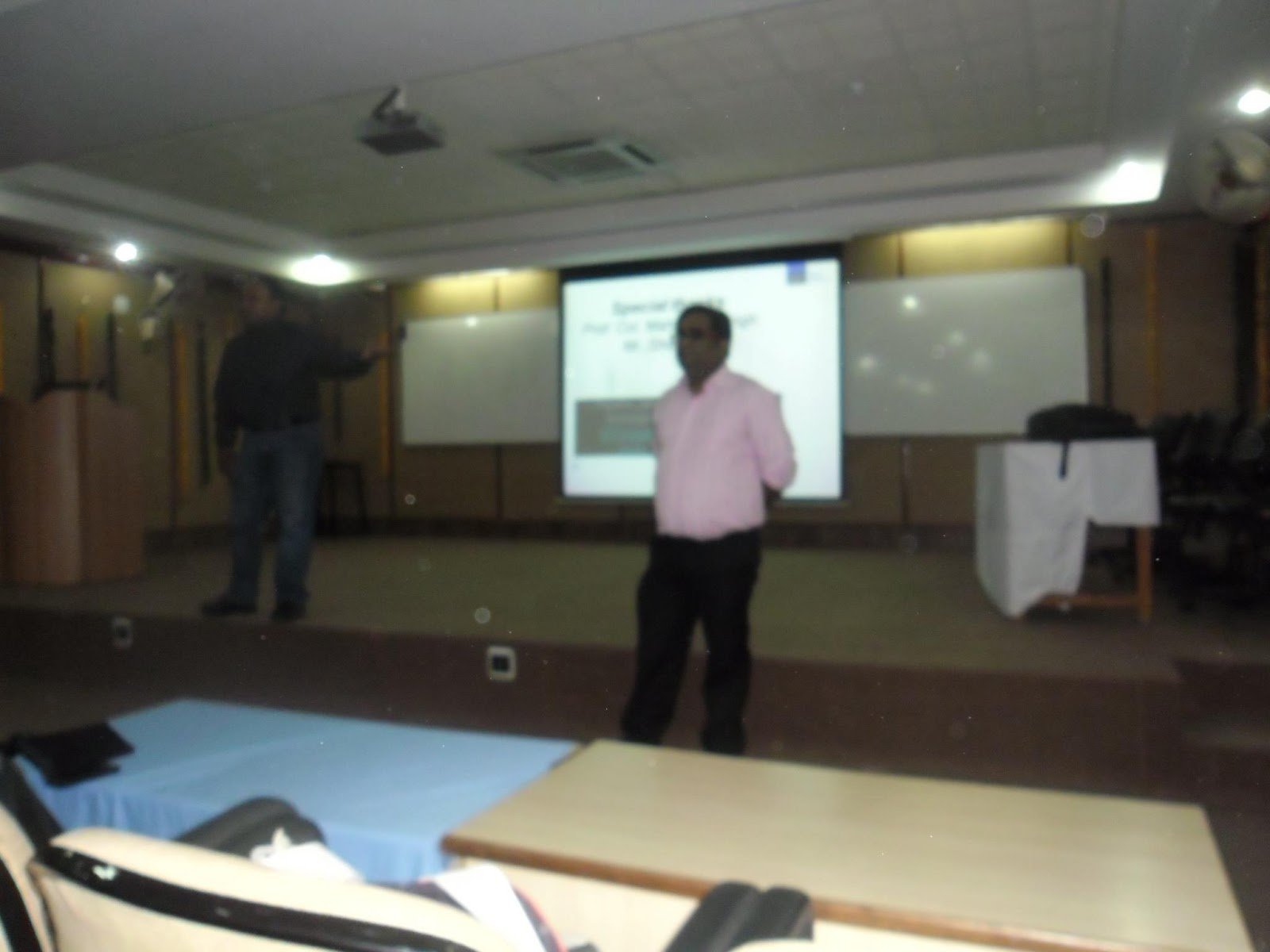
Education initiative at RDIAS,New Delhi
Rahul Karn and Rajeev Jain talking with students Going in the colleges and interacting with the new generation is really a very awesome experience. Recently STC I gave me this golden chance to talk about technical writing in RDIAS college, Rohini. Sharing report of Rajeev Jain who really did a very commendable job by organizing this event and warm thanks for inviting me to this wonderful event. This is a report of education initiative circulated by Rajeev Jain. About STC India education initiative Roli Sinha sharing her experience This is the first time in the history of STC-India that the education team is reaching out to college and universities to conduct awareness sessions about technical communication, and help the students understand the career opportunities in the field of technical communication. STC India is making an attempt to bridge the Academia-Corporate gap by conducting FREE mentoring and guidance sessions. IDF India team is extending all possible help to students, faculty, and colleges to: – Conduct awareness sessions on technical communication – Explore job/career opportunities in this field – Create curriculum for the short-term Industry-Ready courses – Help them understand the corporate needs and expectations from a Fresh Graduate – Enhance students employability and make them corporate ready and even connect them with the recruiter – Invite them to attend STC India conferences, seminars, workshops, and other events Event Update Venue: Rukmini Devi Institute of Advanced Studies (RDIAS), Rohini, New Delhi. Date: April 6th, 2013 STC India Education team of 3R’s (Rajeev, Roli, and Rahul Karn) travelled from different locations to reach the venue on time. Roli and Rahul travelled all the way from another end of Delhi to reach the venue on time. STC team was greeted by dean-academics, director, and the senior professors of the college. All three of us were excited and were hoping at least 50-55 students (since it was a weekend, and the college was open only for this event). We were surprised to see almost 80+ MBA and MCA students. The session started around 10.15 am. Rajeev started the session by asking questions, such as · what made students attend this event? · why did they opt for the Master degree in management or computers? · What are the different job opportunities they are aware of? We were surprised to know that many students had heard about technical communication but till date, they had no-one who could explain and guide them. Rajeev gave a brief introduction to technical communication. He shared many Bollywood and real-life examples to explain the concepts in simple language. Roli shared her hiring experiences and what are the corporate expectations from a fresh graduate. She gave excellent examples of why certain skills are necessary to excel in this field. There were many lighter moments when Rahul started asking questions as a fresher who is looking for the first job. This helped students to open up and they started asking more and more questions. Rahul added more spice by sharing his valentine competition story. Some of the questions asked by students were related to: 1. Starting salary and growth opportunities. 2. Skill set required to excel in this field. 3. Corporate expectations from a fresher 4. Differences between technical writer and content writer. 5. Work-life balance and work timings. 6. Why don’t companies come for campus placement to hire fresher as writers? We anticipated that the event may get over by 12.00 o’clock, but we had to finally stop at 1.00 pm. We promised them to come back again to take up their remaining queries and conduct more sessions. Feedback Rajeev hosting the talk The college management shared instant feedback and informed us that the students were extremely happy and they found the session to be very good, interactive, and useful. The students wanted more sessions from the STC India team. The college management also invited us to conduct one or more event for students of other colleges of their group. Thank You Note: I take this opportunity to thank Roli and Rahul for all volunteer help and making it to the venue on time. The college academics and management team showed interest in introducing business communication and technical writing course for the MBA and MCA students on trial basis. Rajeev also checked their interest in hosting STC India conferences and other events and they happily offered their premises to conduct more such events. Next Event STC-India team is committed to conducting more such awareness sessions and workshops in colleges across the country. The next event is scheduled for April 13th at KIIT engineering and management college, Gurgaon. You are most welcome to volunteer and share your experiences with the students in future events. For more queries or information If you have any queries or need more information or know of any college or university interested in conducting such events at their premises, please contact Rahul Karn (rahulkkarn@gmail.com) . Let’s work together to promote technical communication and contribute our niche to bridge the Academic-Corporate gap.
How to insert Space after a Table in MS Word
Sumit has set up the “body text” style in his word document so that it only has “space after” and has zero “space before.” This works great for laying out his document, except when it comes to tables. The paragraph following the table ends up being too close to the table, and Sumit wants some space between the table and a “body text” paragraph following the table. He wonders if Word can put “space after” a table. Not really, in the sense of “space after” for a paragraph. This can cause some issues when it comes to vertical spacing after tables, as Brian points out. There are two things you can do to work around this problem. First, you could define another style, perhaps called “body after table,” which is based on the “body text” style. The only difference would be that the “body after table” style would have space before the paragraph, not just after. This style can then be applied to the first paragraph after any tables, with the “body text” style used for the rest of the paragraphs. The other option is to insert an extra row at the end of your tables. This row should have no text and should be formatted so that it has no borders. You can adjust the row’s height to reflect the space you want between the main portion of the table and your following text. Information Developers is your source for cost-effective Microsoft Word and technical writing training. This tip applies to Microsoft Word 97, 2000, 2002, and 2003. Subscribe to the Information Developers YouTube channel for more tips and tricks on Technical Writing.
Innovative idea to organize information-Google Tip
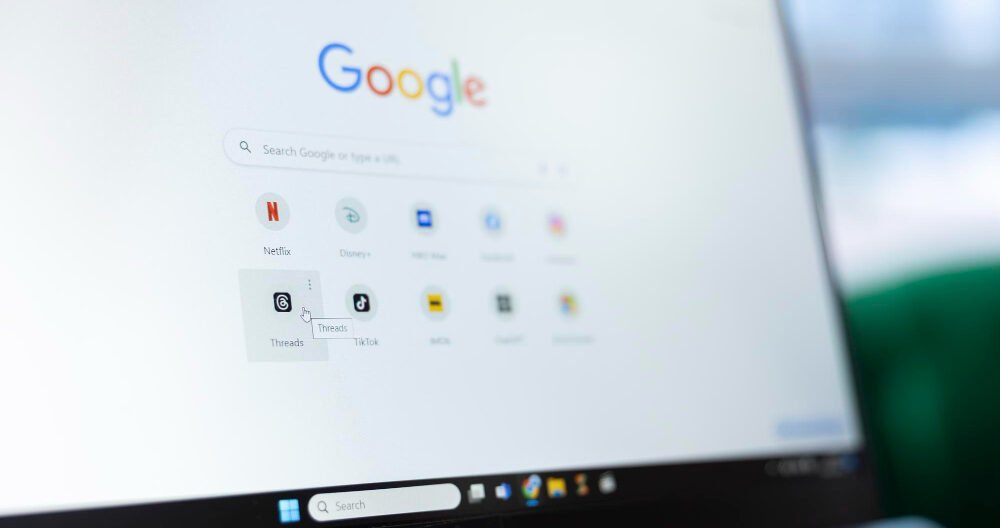
Most of us directly get to the Google search engine and look for solutions whenever we encounter problems related to Google’s services including Gmail, Maps, Chrome, and YouTube. We visit various websites and keep hunting them until we get the best solution to our problems. But to facilitate your experience with its products and services, Google has come up with a website – Google Tips – that includes tips related to its wide range of services. Users can search for tips on a service/product. Tips are presented in the form of cards. Find a card based on your needs and flip it over to learn more. For instance, one of the tips under the Android sections is “Never lose contact with your contacts.” The moment you click on any card, it turns over and comes up with a detailed tutorial describing how to use a particular tip. Tips are presented in the form of cards. Find a card based on your needs and flip it over to learn more. Users can share tips with their friends and can also suggest tips to Google if they have any. You can simply click on “Suggest a card” button suggest a tip.
Why active voice in technical writing?
Active voice makes it clear who is doing what. In an active sentence, the person that is acting is the subject. Passive sentences obscure or omit the sentence subject. Use passive voice when the sentence object is more important than the subject. The active voice is generally easier to read. Examples (subject, object) Before: Our results will be discussed.After: We will discuss our results. Before: Wolverine was made to be a weapon.After: The government made Wolverine. Wolverine is a weapon.
Are Technical Writers and Content Writers Same?
In an initiative to encourage ADID Alumni and other technical writers to share technical writing knowledge,ADID invited Jaspal Singh to share his experience as content writer and technical writer, he come up with well knit and researched post .You can write to him or post comment to ask anything dropping from your mind on changing profession from content writing to technical writing..To a layman, technical writing and content writing might come across as a similar thing. There are various attributes that are common between both professions. However, one can easily find aspects that discern one from the other. To a layman, technical writing and content writing might come across as a similar thing. There are various attributes that are common between both professions. However, one can easily find aspects that discern one from the other. Basic job of technical writers is to develop and design technical documentation in which creativity as well as knowledge about technology is required. On the other hand, content writers write for websites, newspapers and magazines. Before discussing the differences, let’s talk about their common attributes first. Following table represents factors that distinguish Technical Writing from Content Writing: Content Writing Technical Writing Excellent Grammar and Writing Skills Excellent Grammar and Writing Skills + Technical Knowledge Write-ups should be interesting so that audience can find a connection Write-ups should be user-friendly with clear and crisp information Need to exaggerate things Need to make common people aware about the technology without using hardcore technical terms (jargons). Basic computer skills with fair knowledge of fundamental software packages and good knowledge of Internet and searching options Software packages to know in addition to basic package:· a) RoboHelp· b) Adobe Framemaker· c) Camatasia· d) SnagIT Attention-grabbing writing style is a must Need to understand the domain and the target audience Knowledge about current affairs Knowledge about latest technology Looking for training on Adobe RoboHelp,Framemaker or Technical writing? Information Developers offers live, online Adobe Tool classes each month . We can also bring the same great training onsite to your facility. Interested? Contact us for details. If you are interested in learning Robohelp, Framemaker, Madcap Flair,MS VISIO,Captivate,SnagIT,Business writing,Technical writing training at Noida,NCR,Gurgaon,Gaziabad visit www.informationdevelopers.in. For latest update you can also like our LinkedIn page.
MYSTERY OF ‘COMMA’ AND ‘INVERTED COMMA’ UNVEILED
Some Rules for Comma and Inverted Comma. This guest post is from Raksha Pradeep, Director of ApraDocs Information Developers, New Delhi, holds a Masters Degree in Business management in Human Resource from Mumbai University.Apart from her services in the corporate sector she is also involved with various reputed institutes as visiting/ guest faculty for Business Communication. Comma (,) A comma is a punctuation used to denote a pause in the sentence. A comma is used to structure a sentence and helps the reader understand the meaning of the sentence. Place a comma after each introductory word, phrase, or clause. Eventually, she had to admit that he was the better classical singer. In the introductory speech, the philosopher appears to be a scholar of the topic. Whenever I get a break from my busy schedule, I go to my mother’s apartment to relax. Use comma: · To join the items on a list: They own a cat, a dog, two rabbits, and six mice · After certain adverbs: Commas are always used to set off certain adverbs at the beginning of a sentence, including, however, in fact, therefore, nevertheless, moreover, furthermore, and still. If these adverbs appear in the middle of a sentence, they are followed and preceded by a comma. (can be preceded by a semicolon) Using commas to offset certain adverbs is optional, including then, so, yet, instead, and too. Ex-So, that’s it for this rule. or So that’s it for this rule. · Parenthetical phrases Commas are often used to enclose parenthetical words and phrases within a sentence (i.e., information that is not essential to the meaning of the sentence). Ex- M S Dhoni, Cricket Captain of India, hit the ball to score a six. · Between Adjectives · Before quotes · In dates (only when it is written in month day format) Ex- January 21, 2013 · In Numbers: Ex- In representing large numbers, English texts usually use commas to separate each group of three digits. (numbers of 5 or more digits) · In names: Commas are used when writing names where a surname is presented first: Smith, John. They are also used before many titles that follow a name: John Smith, Ph.D. · As an ellipsis: · Commas may be used to indicate that a word has been omitted, as in The cat was white; the dog, brown. (Here the comma replaces was.) to set off a direct address: Vijay, will you please close the door? · The same rule applies when you replace the name with a word which defines the relationship. Darling, will you marry me? Doctor, Is everything fine? · Place a comma before and after the name of a state when you name a city and state in a sentence. · If you include a full address in a sentence, place a comma between each part of the address except for the zip code. No commas should be placed either before or after the zip code. · Place a comma before the coordinating conjunction when you combine two independent clauses into a single sentence. Ex- Neha studies very hard, but she still gets poor grades in English. · Place a comma after but not before a dependent clause. Ex- Dependent clause, Independent clause Independent clause Dependent clause · Comma is always placed between the speaker and the direct quote. · Place a comma where a pause is required in order to avoid misreading. Apostrophe (‘) Apostrophes are used to show possession and omission. 1. Used to show possession: Possession means ownership. When you want to indicate that an object or a trait belongs to or is an attribute of someone or something, you use an apostrophe. Where you place the apostrophe depends on whether the possessive noun or pronoun is singular or plural. To form the possessive of a singular noun, add an apostrophe and an s. o Tree’s leaf 2. To form the possessive of a singular proper noun, add an apostrophe and an s, even if the proper noun already ends in s: o Doll owned by Sita – Sita’s doll, Jesus’s love To form the possessive of a plural noun that already ends in s, add only an apostrophe: The officials’ decision–(the decision was made by a group of officials) To form the possessive of a plural proper noun, add only an apostrophe: The Indians‘ protest To form the possessive of an irregular plural noun that does not end in s add an apostrophe and an s: Children’s bag Forming Possessive Compound Nouns If ownership is separate, make each noun possessive by adding the appropriate apostrophe or an apostrophe and an s: During Dussehra break, I’ll be staying at my brother‘s and my sister‘s houses. The brother and sister separately own separate houses. If ownership is shared, make only the final noun possessive: Every year, I visit my mom and dad‘s winter cottage and summer house. Mom and dad jointly own both residences. 3.Used to show contractions of words: Use an apostrophe in place of omitted letters in contractions: o It is so hot today – It’s so hot today o I have not done my homework – I haven’t done my homework Use an apostrophe to indicate omissions in dates and expressions. 80’s, the class of ‘36, singing ‘n’ dancing The most common apostrophe error is using the apostrophe when what you really want is a plural noun rather than a possessive one. Let’s take examples to illustrate the usage:- The hares burrows You have hares and you have burrows, but you don’t know the relationship between them. The hare’s burrowone hare has one burrow. The hare’s burrowsnow one hare has multiple burrows. The hares’ burrowMultiple hares is sharing one burrow. The hares’ burrowsLots of hares have lots of burrows. Don’t use an apostrophe with personal pronouns. Ex- yours, theirs Know to differentiate between possession and contraction Ex- it’s and its. It’s is ‘It is’ while its is possession Proper use of these punctuation marks can help the writer to bring the actual essence that he wants to convey through his writing.
Redundancy- An Overview
This guest post is from Raksha Pradeep, Director of Information Developers, New Delhi, holds a Masters Degree in Business management in Human Resource, Mumbai University.Apart from her services in corporate sector she is also involved with various reputed institutes as visiting/ guest faculty for Business Communication. Redundancy has a different meaning in a different arena but narrowing the definition to linguistics we can say that it is the superfluity of words in a sentence or the use of words or data that could be omitted without loss of meaning or function. Being verbose in your expression doesn’t mean that a person is an efficient writer but, to express everything in a concise form without letting the facts ignored makes the listener or the reader alert and glued to the topic. We often come across the situations where we see people lacking interest in the subject though it may be interesting just because of repetition of the ideas or opinions. Sometimes to emphasize one’s point of view people use unnecessary adjectives or adverbs but while writing as a professional we should avoid redundancy. Though the list never ends, some common redundancy errors and the techniques to avoid them are cited here:- Eliminate unnecessary adverbs: “I truly believe you.” Instead, we can say “I believe you” It doesn’t change the fact what we want to convey. For example- really, truly, extremely, very, quite, severely, these words often lead to redundancy errors if not used properly. Replace or eliminate meaningless adjectives:- “He is a good runner who runs fast” instead we can say “He is a fast runner”. Adjectives such as good, nice, bad, okay, important, significant may add to redundancy mistakes. Writing concise sentences: Writing short and simple sentences is an effective way to reduce redundancy errors. It also helps the reader to understand clearly what the writing is exactly about. Avoid expletive constructions:- “There is/are”, “It is” these are some of the phrases which usually are unnecessarily used by the writers making the sentence superfluous. For example: “There are over five thousand people listening to him” instead it can be said, “Over five thousand people are listening to him.” Avoid repeating yourself in the following sentences:- “Ram is an intelligent boy. Ram scored highest in the final examination. Teachers often praise Ram.” We can replace Ram by he/him in the following sentences without snatching the meaning of the paragraph. Trimming the fat:- Using a set of words instead of one: These are the most common redundancy errors we make while communicating with others. We should know how to trim the fat and make the sentence more concise. Few examples are listed below:- At the present time- Now Due to the fact that- Because 12 midnight- Midnight In my opinion, I believe- I believe In the event that- If In spite of the fact that- Although In the vicinity of- Near Until such time as- Until Redundancy is mostly overlooked while writing but, when it comes to professional writing it should be taken care of because it’s not the literature or language the reader is looking out for but the content and the facts embedded in it. If you are interested in learning complete RoboHelp, Framemaker, Madcap Flair, MS VISIO, Captivate, SnagIt, Business writing, Technical writing at Noida, NCR, Gurgaon, Ghaziabad visit www.informationdevelopers.in. For the latest update, you can also like our LinkedIn page.